

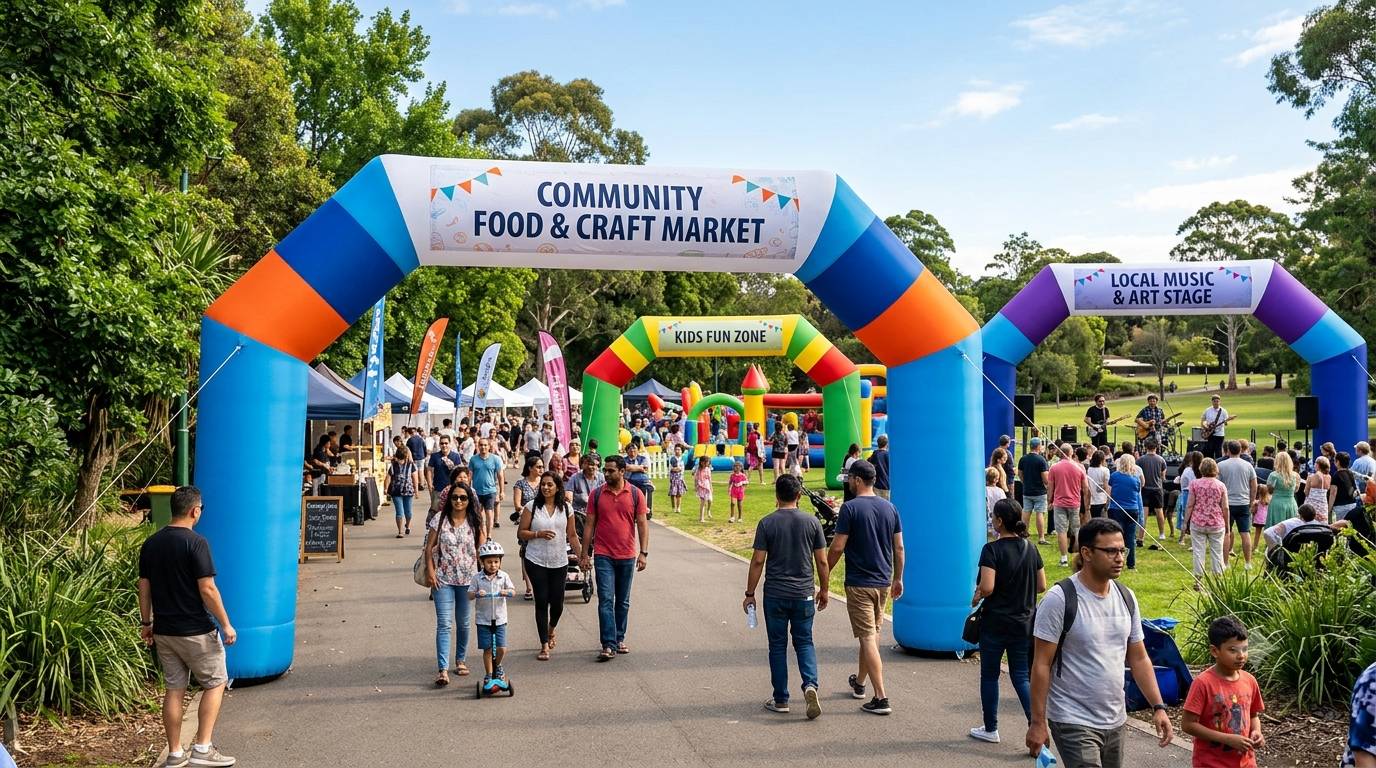
A finish-line arch may be familiar, but its potential reaches far beyond competitive sport. Modern inflatable structures can shape entrances, support branding, guide crowds, frame photographs, and transform ordinary spaces. Their flexible design, strong visual impact, and practical installation make them valuable creative tools for many different events and campaigns.
Inflatable structures were once mainly associated with race starts and finishing points, but their role has expanded considerably. Today, inflatable arches are used to create striking entrances, strengthen brand visibility, organise event spaces, and build memorable visual moments. Their size makes them noticeable from a distance, while customised artwork allows them to match a campaign, venue, product, or theme. They can also be designed in different shapes and proportions, making them suitable for indoor exhibitions as well as outdoor gatherings. This versatility gives organisers a practical way to turn a functional structure into a central part of the visitor experience.
Creating a Strong First Impression at Event Entrances
The entrance is one of the first physical points of contact between an event and its visitors. A well-designed inflatable arch can make that arrival feel deliberate, welcoming, and visually impressive. Rather than relying on several temporary signs, organisers can use one large branded structure to define where the experience begins. Logos, campaign graphics, event colours, and short messages can be applied across the visible surface. For the strongest result, artwork should remain clear from a distance and should not be crowded with small text. The arch must also suit the width, height, and character of the entrance area.
Turning Exhibition Stands into Visible Destinations
Busy exhibitions contain many stands competing for attention, so visibility matters. An inflatable arch can frame a stand and make it easier to locate across a crowded hall. Its height creates a recognisable landmark without requiring permanent construction. A simple tubular design may suit a clean corporate display, while a more distinctive custom shape can reinforce a product or campaign theme. Before finalising the design, exhibitors should confirm ceiling height, available floor space, power access, and venue restrictions. These details help ensure the structure looks impressive while remaining practical during installation and throughout the exhibition.
Supporting Product Launches and Promotional Campaigns
Promotional environments need to attract attention quickly and communicate a clear identity. An inflatable arch can mark a product launch, demonstration area, sampling point, or branded activity zone. It creates a defined space without the cost and complexity of a permanent scenic build. Custom artwork can match packaging, staff clothing, display materials, and wider campaign visuals, giving the setting a consistent appearance. Planning should begin early so measurements, artwork placement, viewing angles, access points, and installation needs can be considered together. A visually bold design works best when its message remains simple and immediately recognisable.
Framing Sporting Events Beyond the Finish Line
Sporting events remain a natural setting for inflatable structures, but their purpose now extends beyond race starts and finishes. They can identify registration areas, spectator entrances, sponsor zones, warm-up spaces, or transitions between different sections of a venue. Each arch should have a clear role rather than being placed only for decoration. Organisers can vary the wording, colours, or branding emphasis according to location while keeping the overall event identity consistent. This approach improves visual organisation and helps participants, visitors, and staff understand where they need to go without overwhelming the venue with conventional signage.
Building Branded Photo and Content Opportunities
Visual content has become an important part of event promotion. Visitors often photograph entrances, installations, and branded environments that feel distinctive. In the middle of a campaign space, inflatable arches can create a strong focal point without requiring a complex backdrop. The best position combines suitable lighting, enough standing room, and a clear surrounding area. Branding should remain visible when people stand beneath or beside the structure. Organisers should also consider how the arch will appear in portrait and landscape formats, since images and videos may be shared across websites, social channels, press materials, and internal communications.
Guiding Visitors Through Large or Complex Venues
Large or unfamiliar venues can be difficult to understand at first glance. Inflatable arches can divide open spaces into clear zones and mark important routes, such as entrances to hospitality areas, activity sections, family spaces, or controlled access points. They should support essential directional signs rather than replace them. Clear wording, recognisable colours, and sensible placement make each structure easier to interpret. Where several arches are used, a consistent design system can connect them with the wider event layout. Their scale is particularly useful outdoors, where standard signs may be difficult to see above crowds or temporary structures.
Adding Impact to Corporate and Community Events
Corporate functions, public celebrations, festivals, and community gatherings can all benefit from a clear entrance or central visual feature. An inflatable arch can make a temporary venue feel more complete and give the occasion a stronger identity. The design does not need to be highly detailed to succeed. A restrained colour scheme and carefully positioned branding often create a more professional impression than an overcrowded layout. Size must also suit the setting. A road-spanning structure may overwhelm a small indoor space, while a modest arch can disappear within a large outdoor site. Accurate measurements help maintain visual balance.
Making Custom Design Work More Effectively
The creative value of an inflatable arch depends on how well shape, colour, scale, branding, and placement work together. A bold idea may still perform poorly if it cannot be seen clearly or installed within the available space. Organisers should begin by defining the purpose of the structure. It may need to mark an entrance, span a route, frame an exhibition stand, support photography, or attract attention to a campaign. Once that purpose is clear, dimensions and artwork can be developed around it. Supplying accurate venue measurements, access information, and artwork requirements early can prevent avoidable changes later.
Planning for Safe and Reliable Installation
A creative installation must also perform reliably throughout the event. Organisers should consider the surface, available power, weather exposure, visitor access, and the length of time the arch will remain in place. Indoor and outdoor settings may require different preparation, particularly where wind or restricted space is involved. The surrounding area should allow comfortable movement, while cables, equipment, and anchoring points must remain clear of walkways. Setup and removal arrangements should be confirmed before the event date. Careful preparation allows the structure to achieve its visual purpose without creating unnecessary pressure for organisers, venue staff, or visitors.
A final pre-event inspection can confirm that dimensions, access routes, visibility, and positioning remain suitable after stages, barriers, stands, and other temporary structures are installed nearby on site.
Conclusion
Inflatable arches have developed into far more than markers for race starts and finishes. They can define entrances, strengthen exhibition stands, organise large venues, support promotional activity, and create visually appealing content opportunities. Their value comes from combining scale, customisation, visibility, and practical flexibility within one temporary structure. However, the most effective results depend on clear objectives, accurate measurements, suitable artwork, and careful installation planning. Organisers should consider where the structure will be seen, how people will move around it, and what message it needs to communicate. When these details are handled thoughtfully, the arch becomes part of the experience rather than a simple decoration. It can also support clearer navigation and a more professional atmosphere across the wider event environment. From corporate functions and exhibitions to sporting and community events, inflatable arches offer a memorable way to shape space, attract attention, and give visitors a clear sense of arrival.
